A poorly sized or badly positioned point-of-sale display disappears visually on a crowded shelf: height, width and material weight determine its impact before the graphics even come into play. Choosing the right visual communication tools for your retail space makes the difference between a message that is seen once and a message that triggers a purchase.
The POS display (point-of-sale advertising) works at the level of shelves, counters and store entrances: it targets the immediate buying decision. In-store information signage (information at the point of sale) is primarily used to guide the customer, clarify the offer and streamline the shopping journey. The two complement each other, but they do not serve the same purpose.
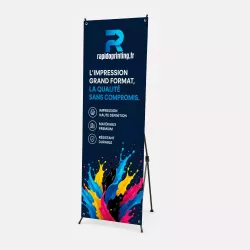
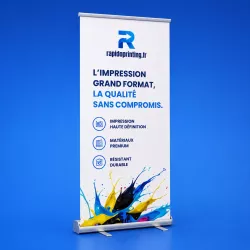
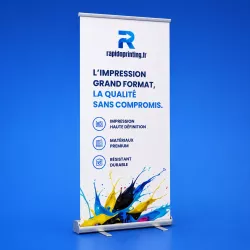
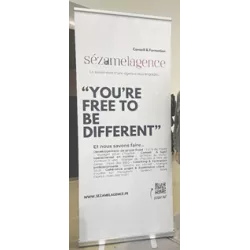
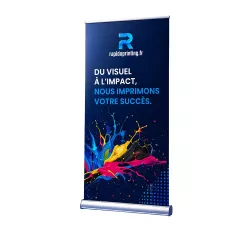
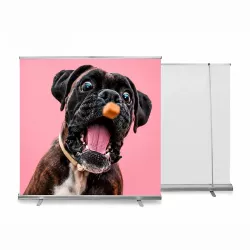
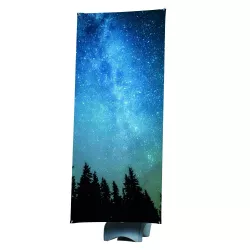
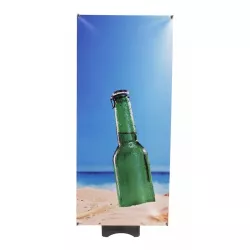
Roll-ups generally come in three useful widths: 85 cm for a corridor or narrow area, 100 cm for a stand or standard aisle, 120 cm for a stronger presence. The size is chosen according to reading distance and the actual clutter around the display: an 85 cm unit loses legibility as soon as shoppers pass several metres away.
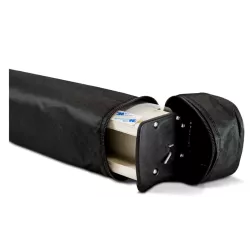
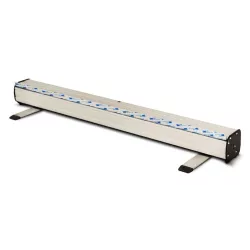
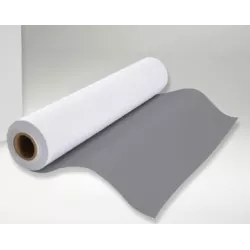
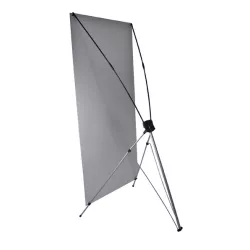
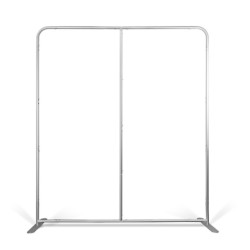
The structure also changes how it is used. An ECO base suits a short campaign or a one-off installation, a Standard version holds up better at recurring events, and a sturdier cassette with a PET blockout graphic limits waviness and better protects the print between setups. The stability of the base remains the top criterion if the display travels often.
When is an advertising totem a better choice than a roll-up?
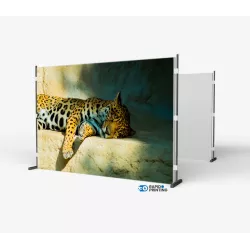
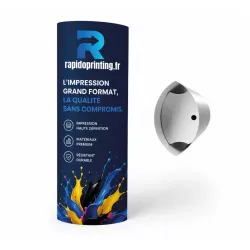
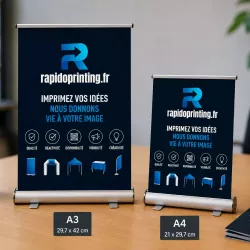
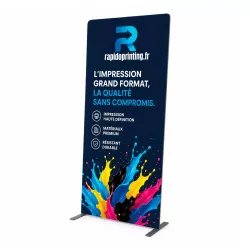
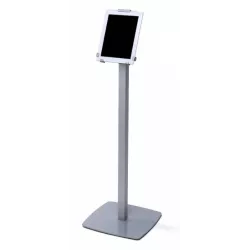
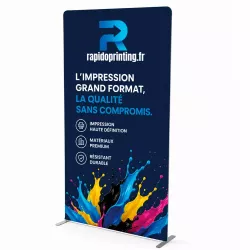
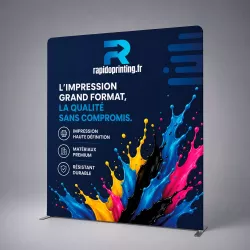
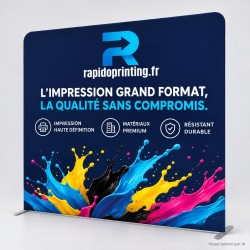
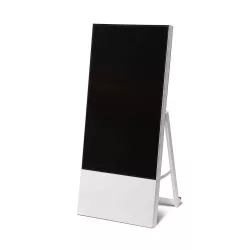
A countertop totem with stretched fabric and a printed polyester cover works well when the message needs to stay close to the product or the point of purchase. Stretched fabric avoids reflections and keeps a smooth surface, which is useful in a retail shop or a well-lit reception area.
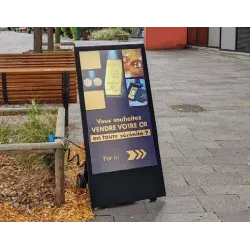
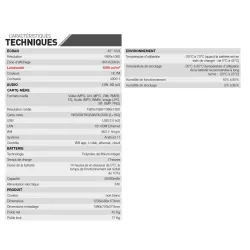
Outdoors, the logic changes: the priority is no longer the look, but durability. An IP65 digital totem or a structure designed for bad weather must be chosen on concrete criteria: waterproofing, frame rigidity, ground stability and easy maintenance. Without these, the display does not last, even with a great graphic.
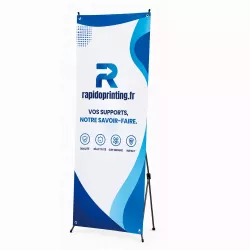
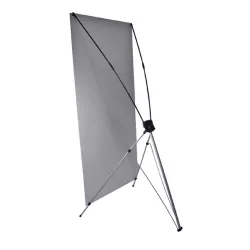
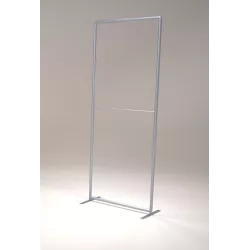
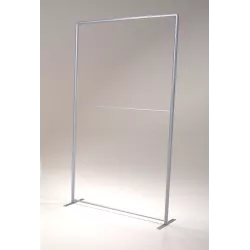
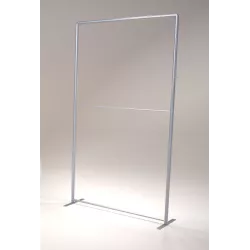
X-Banners and cardboard totems suit a short campaign, a promotion lasting a few days or a tight budget. For a more lasting installation at the point of sale, an aluminium structure or a fabric frame holds up better over time and withstands repeated handling better.
Which signage really improves the customer journey in store?
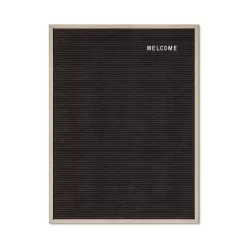
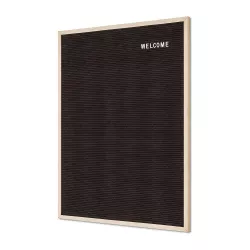
Wall-mounted signage is used first and foremost to guide without overloading. Boards, information panels, illuminated displays and aisle markers must be visible from the main traffic routes, not only from the aisle concerned. Well-placed signage reduces hesitation and limits the number of products customers cannot find.
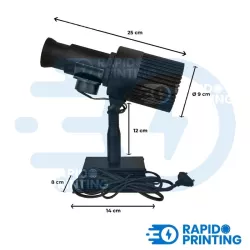
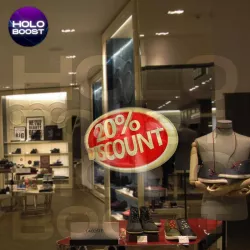
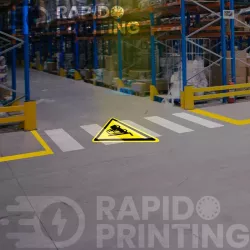
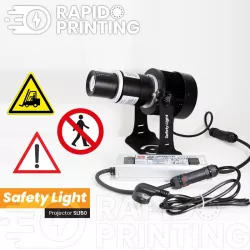
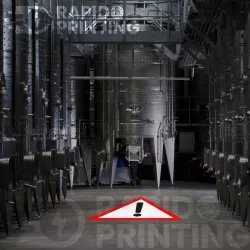
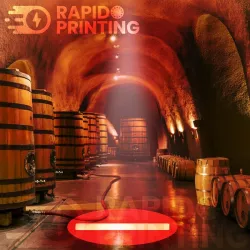
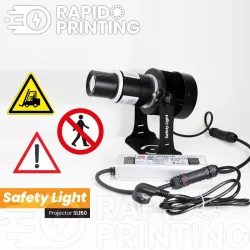
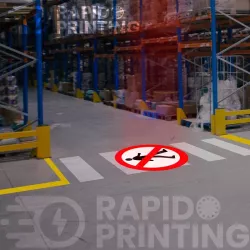
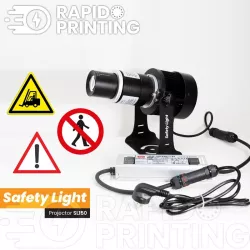
Floor graphics and logo projectors are useful when wall space is already saturated. They capture attention without adding volume to the field of view, provided they are reserved for real points of passage: entrance, end-of-aisle display, promotional area, checkout.
Warning or danger signs follow a different logic: compliance, immediate legibility and placement at the right points of contact. Their effectiveness depends less on design than on their location and their contrast with the surrounding environment.
Are digital solutions right for your point of sale?
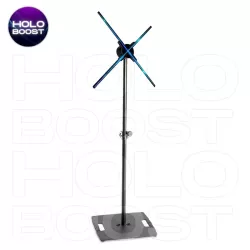
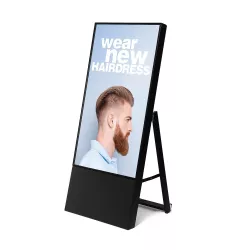
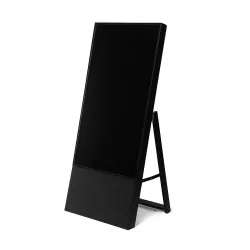
A video screen or a 3D hologram only makes sense in a high-traffic area. At a store entrance, on a featured aisle or during a product launch, these displays create a measurable visual stop. In a secondary corridor, their impact drops quickly, while the running costs stay the same.
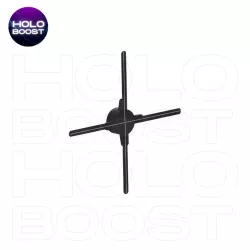
3D holographic fans catch the eye over short periods, especially in sales promotions or seasonal campaigns. However, they require a proper installation, a secure power supply and a clear viewing angle. The deciding criterion is not the visual effect alone, but the balance between traffic, exposure time and maintenance.
Which print finish should you choose depending on the context of use?
A glossy finish works well for promotions and high-contrast graphics, particularly under direct retail lighting. A matt finish limits reflections and remains more legible on institutional signage, an indoor sign or a display meant to be viewed head-on for a long time.
Lamination adds useful protection against rubbing, dirt and frequent handling. On a display exposed outdoors or moved regularly, this finish noticeably extends the visual lifespan. It is not an aesthetic detail, it is a safeguard over the period of use.
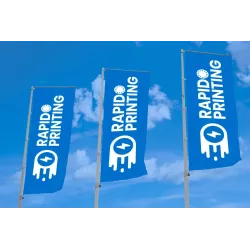
Between a Kakemono printed by dye sublimation on textile and a banner on PVC, the result does not meet the same need. Textile is better suited to a staged setting or a refined environment, as it absorbs light and hangs better. The banner remains more suitable for a robust temporary installation or more intensive logistical use.
What guidelines for combining POS displays, in-store information signage and point-of-sale marketing?
Point-of-sale marketing starts with a simple trade-off: attract, inform or guide. A POS display is used to make an offer or promotion stand out, while in-store information signage is used to guide the journey and clarify how the store is read. Mixing the two functions on a single display often makes the message less effective.
The right choice rests on three guidelines: reading distance, installation duration and handling frequency. A display seen from 8 or 10 metres away is not designed like a counter graphic read from 50 cm. Likewise, a fifteen-day campaign does not require the same structure as a permanent aisle display.
For smooth production, lead time depends mainly on the complexity of the display, the finish requested and the quality of the files supplied. A graphic prepared in the right format, with bleed and safety margin respected, avoids unnecessary corrections and secures the move into production.
Contact us if you need help choosing between several communication displays for a shop, a trade show or a short commercial campaign.