


Illuminated Wall Sign
Showing 1-2 of 2 item(s)
LED illuminated wall sign: distinction, lighting and shopfront visibility
On an urban shopfront, the legibility of an illuminated wall sign depends first on the type of lighting chosen rather than on the graphic design: LED, neon and LED neon do not produce the same light at a distance, nor the same energy consumption, nor the same maintenance. A well-sized aluminium and acrylic structure suits shops, restaurants, showrooms and SMEs looking for durable illuminated signage that remains visible in full daylight, at dusk and under street lighting.
LED or neon illuminated sign: which type of lighting for your business
An LED illuminated sign is the right choice when your priorities are consistent lighting, low energy consumption and a long service life. A typical benchmark is a lifespan of more than 50,000 hours, with a slim profile and controlled running costs. It is the most coherent solution for a shopfront used daily, with frequent switching on and limited maintenance constraints.
A neon illuminated sign follows a different logic: the glow is more pronounced, the visual effect more expressive, and recognition from afar works well on busy streets. This choice remains relevant for a restaurant, a bar or a shop that wants a bold, distinctive visual presence. In return, energy consumption and upkeep are higher than with LED, a point that should be factored into the quote and the running budget from the outset.
An LED neon illuminated sign combines the light-line effect of traditional neon with the advantages of LED technology: reduced maintenance and moderate consumption. This compromise works well for a decorative visual identity indoors, or for a shopfront that must stay visible without adding to the maintenance burden. If your priority is sobriety and a crisp, clear message for an SME or an upmarket shop, standard LED remains the better fit.
Materials and light box: which supports really hold up on a facade
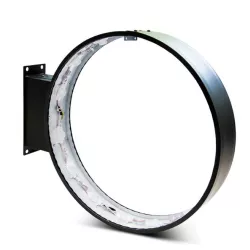
The structure of a wall sign often rests on a simple trio: aluminium for the structural support, acrylic for light diffusion and protection, and a light box to channel the illumination. Lacquered aluminium provides rigidity and lightness, which matters when fixing to a facade. Acrylic protects the lighting and softens the points of light, provided its thickness is well chosen and it is properly assembled to the support.
The light box becomes relevant as soon as you want even light across the entire visible face. It avoids the hot-spot effect common on undersized or poorly spaced setups. On an illuminated sign seen up close, this detail is noticed immediately, especially on light backgrounds and solid white areas.
Some applications opt for dibond, a composite material that combines lightness and rigidity without requiring a complex light box. Whichever solution is chosen, upkeep remains limited: cleaning the acrylic, checking the fixings, inspecting the power supply. A poorly installed illuminated sign rarely ages because of its printing; it ages first because of its structure and fixing points.
Which format and lettering for a custom illuminated sign
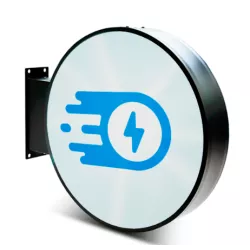
The format of a custom illuminated sign must follow how your facade is actually read. A compact format is enough for a narrow shop window or a slow-moving pedestrian street, where customers see the sign from a few metres away. On a wider road or a recessed facade, you need to allow for more legible surface area, otherwise the logo is visible but the name cannot be read from a distance.
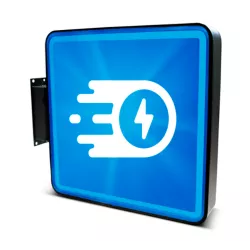
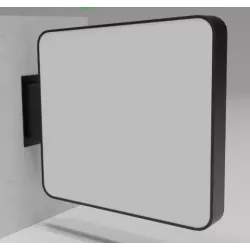
The choice between square, round or made-to-measure formats is not merely aesthetic. A round format suits a simple symbol or emblem, whereas longer lettering requires sufficient usable width. If your identity rests on the company name, the space given to the letters takes priority over the overall shape.
The logo and lettering can be integrated into the structure or applied to the acrylic depending on the desired result. Integration into the volume reinforces the effect of purpose-built signage and is visually more stable on a well-kept facade. Surface application remains relevant for simpler projects or narrow shop walls, provided you allow for sun exposure and cleaning cycles.
Visual rendering options and running costs of the illuminated sign
The colour temperature of the light immediately changes how your advertising sign is perceived. Cool white gives a sharper, more contemporary reading, often chosen for showrooms, service businesses and modern retail signs. Warm white suits shops and restaurants seeking a more welcoming atmosphere.
The finish of the aluminium, matt or gloss, affects reflections on the facade. In an urban environment with shop windows, headlights and street lighting, a matt finish is generally more visually stable. The depth of the light box influences the evenness of the light and the overall bulk: the shallower the volume, the more carefully the light sources must be positioned to avoid shadows or hot spots.
Indoor or outdoor illuminated wall sign: which contexts for which solution
For an urban luxury shop, an indoor acrylic wall sign with cool white LED delivers a clean, discreet and legible result. The aim is not to flood the space with light, but to mark the entrance with clean, even illumination. In this context, finesse of execution and subtle visibility matter more than raw power.
For a restaurant in a pedestrian zone, a neon or coloured LED illuminated sign works better if trade mainly picks up in the evening. Night-time visibility and immediate recognition of the facade become the priorities. A more prominent light box can be justified if the street is crowded with competing visual messages, in order to create contrast and depth.
For an SME in a town centre, a compact aluminium and acrylic wall sign with integrated LED is often the most rational choice in terms of price and installation. Installation is more discreet on an existing facade, with a clear impact and no heavy alteration to the building. It is also a configuration that is simpler to maintain over time and to refurbish.
For a showroom or gallery, the wall sign can be an integral part of the scenography and the customer experience. The light box or illuminated lettering then serves as much to guide visitors as to set an atmosphere. In this case, the appearance under artificial lighting must be checked more carefully than legibility at long distance.
Lead times and quotes for a made-to-measure illuminated sign
A made-to-measure illuminated sign first requires four points to be fixed without approximation: dimensions, type of lighting, materials and installation method. This is what makes it possible to produce a reliable, usable quote, with no gap between the approved project and the reality of the facade. The simpler and more standardised the shape, the faster production can begin.
For standard custom manufacturing, a benchmark average lead time is around 10 working days, subject to technical and graphic approval. A complex light box, specific lettering or an installation with electrical constraints will logically extend this schedule. It is better to lock down facade access, power supplies and fixing points beforehand than to correct an error once production has started at the manufacturer.