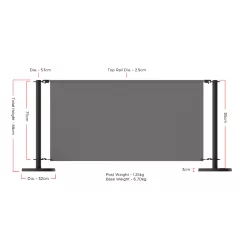
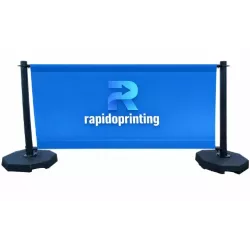
A 1.5 m high terrace divider effectively marks out an area over a depth of around 5 metres, provided that the stability of the base and the level of screening suit your actual use. Whether you choose a solid screen, a semi-open panel or a retractable side screen, the right choice does not depend on appearance, but on wind exposure, how often you set it up and how much privacy you need.
Which configuration should you choose for a terrace screen or privacy barrier?
A fully screening privacy barrier is suitable when you want to block sightlines on a restaurant terrace, in a VIP area or in an outdoor waiting space. A semi-open model is recommended if air needs to circulate, particularly on an exposed terrace or in a reception area where a completely closed screen would catch too much wind.
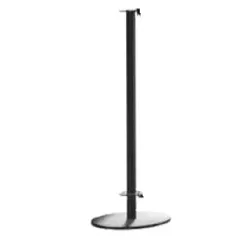
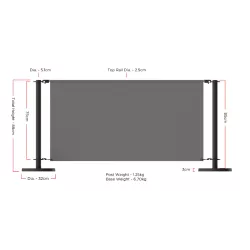
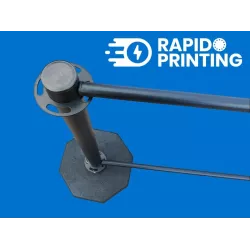
For a permanent or regular installation, the main criterion remains the mechanical strength of the structure: frame quality, rigidity of the uprights, type of ground anchoring or weight of the bases. A poorly stabilised screen is acceptable in calm weather, but can become unusable as soon as the wind picks up.
A fixed garden or balcony privacy barrier (wooden fence, living hedge screen, screwed-on panels) permanently hides you from your neighbours' view, but cannot be moved. A mobile divider does the opposite: it follows the layout of your terrace, with no drilling or permanent anchoring.
The materials of a divider affect its lifespan, not just its weight
Aluminium is generally chosen for the structure: it resists corrosion well, is lighter to handle than steel and withstands regular outdoor use. PVC or closed synthetic panels are suitable when the main aim is to block light wind and moisture. UV-treated polyester fabric remains the right choice for flexible, foldable or retractable versions.
A waterproof, UV-treated fabric generally lasts 2 to 3 seasons under continuous exposure, provided it is properly tensioned and stored in a dry place outside periods of intensive use. On a highly exposed installation, the quality of the seams, joints and fixings matters as much as the main material.
Privacy screen or windbreak: the level of screening must be consistent with exposure
A fully screening barrier blocks 80 to 100% of sightlines in practice, which makes it suitable for professional terraces where visual separation is the priority. A semi-open privacy screen offers around 50% screening: it provides less protection from view, but reduces wind pressure and is more comfortable in open areas.
The stated wind resistance only makes sense if the fixing system matches it. Resistance of up to 40 km/h can be realistic with heavy bases or a solid fixing; it no longer is with a lightweight support placed without anchoring on an open terrace. On a hotel balcony on an upper floor, the same caution applies.
A fixed screen is recommended for a terrace used throughout the season, with a stable layout plan. A modular, foldable or retractable model makes more sense for events, temporary reception areas or spaces that need to be reconfigured quickly depending on footfall.
Assembly and storage are not mere logistical details. If the system has to be moved every week, choose one that is easy to handle, with few loose parts and metal fixings that withstand repeated assembly.
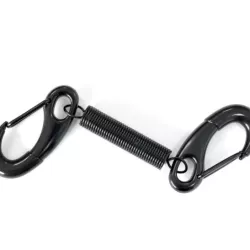
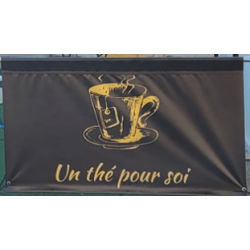
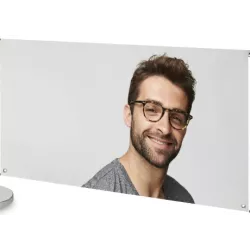
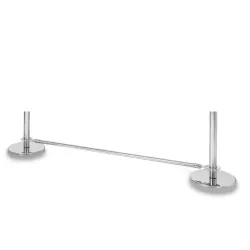
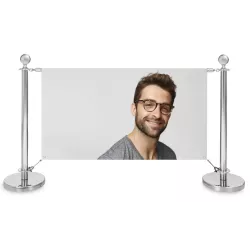
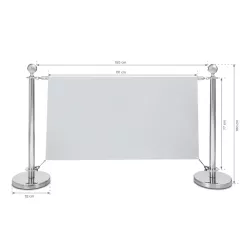
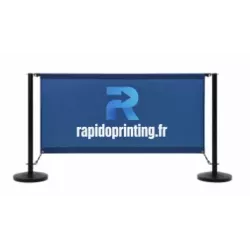
Complete sets and individual parts are offered separately: custom-printed double-sided banner, microperforated or solid banner, 1.50 m chrome-gold crossbars, posts and pairs of tensioners. A damaged banner or a visual to be changed therefore does not oblige you to buy the structure again.
Open panel, solid panel or side screen: which terrace divider for which case?
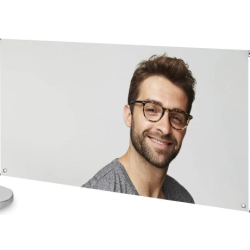
The solid panel is used to create a clear separation between two dining, reception or waiting areas. The open panel, which is more decorative, is better suited when you want to structure the space without visually closing off the whole area, for example on a commercial terrace where an impression of openness must be kept.
A blind-type side screen is useful for blocking occasional side wind or temporarily isolating an area. It is not the most suitable option for permanent partitioning along a long line of terrace: the tension on the fabric and the repeated handling eventually affect its lifespan.
What uses is a terrace divider suited to?
On a restaurant terrace, it is used first and foremost to shield tables from prying eyes and to organise the flow between service and customers more effectively. In an outdoor reception area or a hotel garden, it creates clearly defined zones without a heavy partition. In a waiting area, it guides visitors and channels flows without visible crowd barriers.
At an outdoor trade show or event, the privacy barrier does not play the same role as in a permanent installation. Priority is then given to speed of assembly, compactness once folded and the ability to remain presentable after several journeys. Unlike a balcony privacy screen or a fence anchored on steel posts, it must be able to leave again the same evening.