


Inflatable Advertising



Showing 1-5 of 5 item(s)
A 4-metre-high inflatable advertising structure can be spotted from dozens of metres away, whereas a standard banner disappears as soon as the surroundings become visually busy. This type of display is mainly used to mark an entrance, signal an activity area or make a brand visible above a flow of visitors. The right choice is not decided first by shape, but by the inflation method, the installation conditions and the length of exposure.
Inflatable advertising structures and inflatable point-of-sale displays: which shape for which use?
Inflatable advertising objects cover several distinct families: inflatable arches, giant balloons, tethered hot-air balloons and customisable towers. These displays are generally made from coated polyester, PVC or nylon, with digital printing on a textile cover or on the envelope depending on the model. The material matters above all for mechanical strength, transportable weight and outdoor performance.
Inflatable arches, giant advertising balloons, towers: which inflatable structure should you choose?
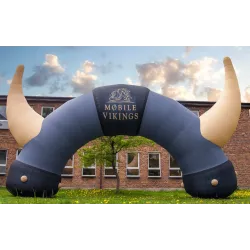
An inflatable advertising arch is ideal for marking a race start, a show entrance or a promotional access point. It works well when you need to create a visible, identifiable passage, with your branding read from the front. At a sporting event or a commercial operation, it is often the most useful format for organising visitor flow.
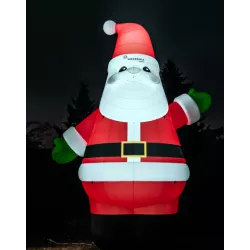
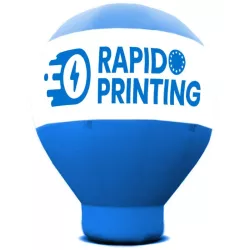
Giant advertising balloons follow a different logic: they are used first and foremost for long-distance visibility. Placed on the ground, they draw the eye to a specific zone; in tethered or suspended versions, they rise above neighbouring stands and installations. This is the right choice when the priority is visibility at height rather than marking out an area at ground level.
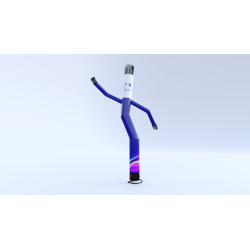
Inflatable advertising towers are better suited to an exhibition stand, a shop entrance or an indoor activation. Their footprint remains small, but their verticality lets them carry a message, a logo or a visual on several sides. For a one-day show or a promotional corner, this format is often easier to integrate than an arch.
Sealed air, self-inflating, helium: the inflation method changes the use
The most important criterion for an inflatable structure is how it maintains pressure. A sealed-air structure is inflated once and then keeps its shape without a continuous blower, which suits short-term use, indoor installations and settings where noise must be kept low. You should, however, check the quality of the valves, the seams and the ballasting.
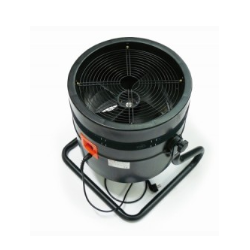
Self-inflating models run with a continuous blower. They are suited to long operating periods, outdoor events and large volumes that must keep a steady tension for several hours. In return, you need to plan for a stable power supply and take the noise level into account in the installation environment.
A helium inflatable balloon meets a very specific need: gaining height without a rigid structure. It is mostly used for short or medium-term outdoor operations, with long-distance visual recognition. This choice involves more closely managed logistics, a reliable anchor point and some planning for gas replenishment depending on the duration of the operation.
Custom-made: when a standard shape is not enough
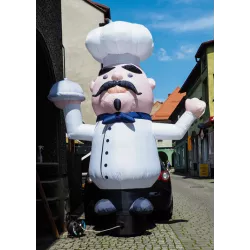
A custom-made inflatable makes sense when the shape itself carries the message: a product replica, an iconic volume, a mascot, a bottle, a pack or a brand object. In this case, personalisation concerns not only the printing but also the proportions, the fixing points, the printed areas and the assembly constraints. The more specific the shape, the longer the manufacturing and technical approval time.
For a simple visual identity, a printed cover on a standard shape often remains the most rational choice. You keep strong visual impact with a production cost and lead time that are easier to control. For a product launch or a promotional tour, custom work is generally reserved for campaigns where the silhouette itself must be recognised immediately.
In store, at a trade show, outdoors: the same structure does not meet the same constraints
In a shop or shopping gallery, the available height and foot traffic take priority over maximum size. A tower or a light suspended balloon is more suitable than a bulky floor-standing volume. You also need to consider the site's safety rules, the permitted hanging points and the assembly time, which is often short.
At a professional trade show, legibility at medium distance comes before size alone. A structure that is too wide can overwhelm a stand, whereas a well-printed vertical format does more to guide visitors through the aisles. The rendering of the visual matters too: on printed textile, reflections that interfere with reading under artificial lighting are generally avoided.
Outdoors, the question is no longer just visual: it becomes mechanical. Ballasting, guy lines, fabric strength and the stability of the anchor points determine how well the structure holds up throughout the event. For an installation repeated over several dates, these details make the difference between a reusable display and a product that warps or wears out after its first outings.
Alongside banners, flags or tents, the inflatable advertising display serves above all as the main landmark in the visual hierarchy. It attracts attention from afar, while the other displays take over for the detailed message at close range. If your goal is to get a specific point identified in a busy environment, this strong signalling function is what you should aim for first.