


Notebook
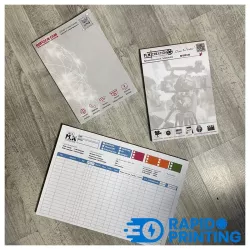
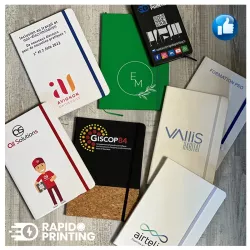
Showing 1-2 of 2 item(s)
Between a rigid A4 notebook and a flexible A5 format, the choice is not a matter of aesthetic preference: it determines how the notebook will be used professionally. An A4 notepad is the right fit for a marketing manager or a project manager; an A5 notebook suits travel or meetings. Paper weight and binding determine durability: a note does not age the same way on a meeting table over several years as in a bag used every week.
Which notebook format should you choose for your needs?
The A4 format suits stationary use: taking notes in meetings, client files, training materials. A5 remains the best-balanced format for mobile use, offering enough writing space without taking up too much room in a bag. A6, the pocket format, mainly meets event, reception or corporate gift needs.
The binding changes how comfortable the notebook is to use from the very first opening. Spiral binding allows a full fold-back and lies flat when open, which is useful for notepads used standing up or on the move. Perfect binding offers a more understated look, better suited to corporate notebooks or books given to clients.
Paper, binding and inside pages: what lasts over time
Offset paper remains the most logical choice for everyday writing: it takes pen well and avoids a slippery feel. Coated paper is better suited if the cover or some inside pages include colorful visuals, but it is less natural to write on. Recycled paper meets CSR requirements, provided you check that the look you want is compatible with its more matte appearance.
The layout of the inside pages should follow the intended use, not a graphic habit. Blank pages suit sketches, diagrams and free-form notes. Ruled pages give better structure to continuous writing, while dotted pages offer more flexibility for alternating text, tables and annotations.
A hardcover protects better a notebook that is handled often, placed on various surfaces or kept over time. A soft cover reduces thickness and weight, which matters for a notebook handed out at trade shows or carried daily. Between the two, the right choice depends on how often it will be handled, not on appearance alone.
Which finishes for a truly suitable personalized notebook?
Printing the logo on the cover is enough in many cases, provided the material and finish are consistent with the context in which it will be distributed. A notebook handed over at a sales meeting does not call for the same finishes as one distributed in bulk at an event. The artwork must remain legible, even on a small format.
Matte lamination limits reflections and is better suited to use in a meeting room or under direct lighting. Gloss lamination strengthens contrast and colors, which is useful for a visual or very bold cover. Soft touch gives a more velvety feel, but it is mostly reserved for presentation runs or corporate gifts. Gold foil or a special marking makes sense on a plain cover, less so on an already busy design.
Digital or offset: which printing technique for your quantity?
Digital printing is suited to small and medium runs, with more flexible production setup and generally shorter lead times. Offset becomes relevant when volumes increase and the unit cost needs to be optimized. The right trade-off therefore depends on the print run, but also on the number of versions to be produced.
Production lead time varies depending on the format, the binding and any added finishes. A simple notebook in a standard format with a soft cover is processed faster than a hardcover model with special lamination or additional marking. For an order with a firm delivery date, it is often the finish that extends the schedule more than the printing itself.