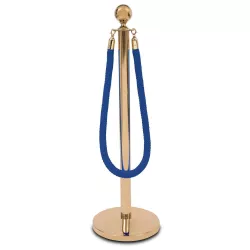
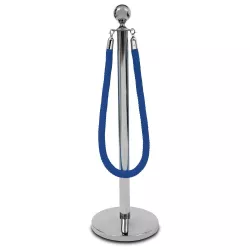
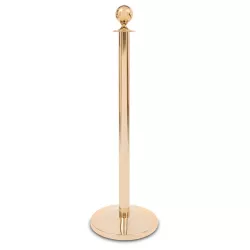
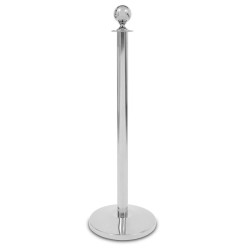
Between a rigid metal barrier and a rope barrier, the difference is immediate: one imposes a cold physical and visual limit, the other channels the flow of visitors without weighing down the atmosphere of the venue. The rope barrier suits reception areas, trade shows, VIP zones and exhibition counters where circulation must remain clear without spoiling the presentation.
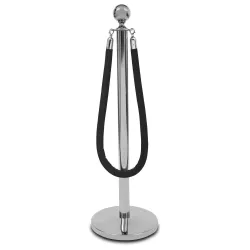
The first criterion when choosing is the type of post. A model on a weighted base is easy to move and suits temporary setups, such as a trade show or a product launch. A wall-mounted fixing frees up the floor space and works better in a lobby, a corridor or a permanent queue.
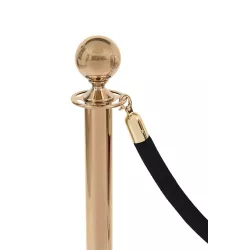
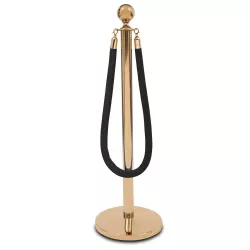
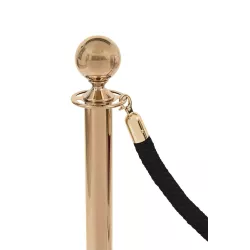
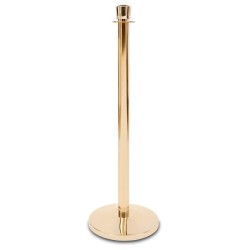
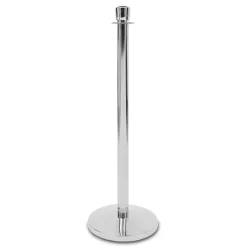
The post material affects both durability and visual appearance. Brushed stainless steel blends well into contemporary environments and withstands repeated use better. Black lacquered steel or brass are more fitting when aesthetic consistency takes priority, on a premium counter, at a restaurant entrance or in a staged event space.
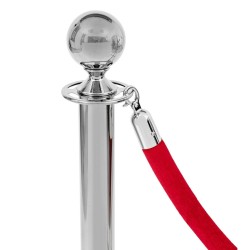
The rope should not be chosen on colour alone. A velvet rope gives a denser, more prestigious look, suited to VIP zones, museums or upscale reception areas. Polypropylene or braided nylon withstands frequent handling better and suits busier flows, with repeated assembly and dismantling.
The length of the rope directly affects how legible the route is. A span that is too long creates a visual sag and gives a less polished impression, especially in a narrow or very busy space. For a short queue or a counter boundary, we generally recommend controlled sections between posts rather than overly stretched marking over long distances.
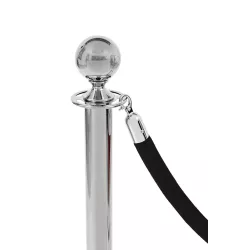
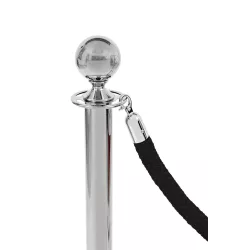
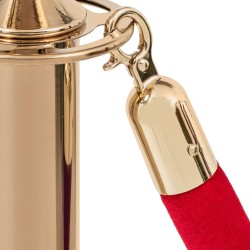
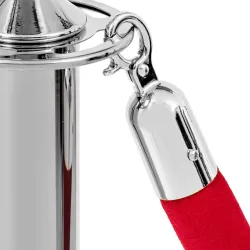
The fixing systems influence how quickly the barrier can be installed. Snap hooks and clips allow simple assembly without specialist tools, which is useful when the setup has to be repositioned several times a day. Chrome or gold-finish end fittings must also stay consistent with the finish of the posts, otherwise the whole set looks pieced together.
The finish has a practical role, not just a decorative one. A shiny chrome shows fingerprints more easily in a high-traffic lobby. Brushed stainless steel or a matt finish requires less visual upkeep and keeps a more even appearance between cleanings.
For occasional use, modularity remains the top priority. Removable posts with a stable base are easier to store and let you reconfigure an entrance, a stand or a waiting area in a few minutes. For a long-term installation, look first at the stability of the base, the quality of the fittings and the rope's resistance to repeated friction.
The rope barrier structures a space without breaking up the sightlines. It is the right solution when you need to guide, filter or reserve an area while letting the venue breathe visually. In a showroom, a hotel, a ticket office or an exhibition space, this flexibility often makes the difference between a useful boundary and a layout that needlessly hardens the welcome.