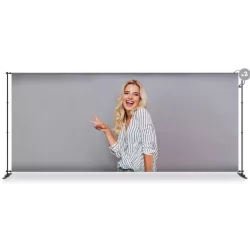
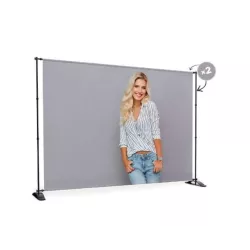
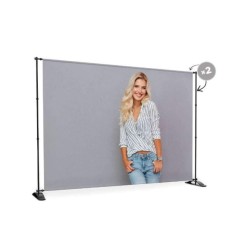
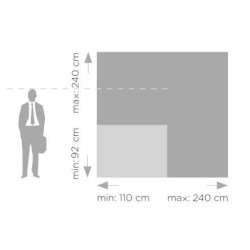
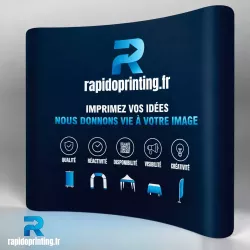
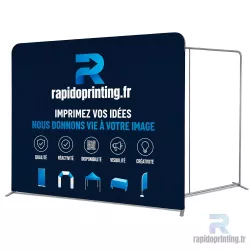
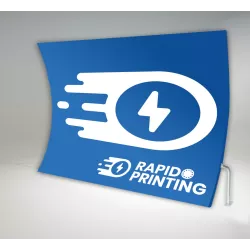
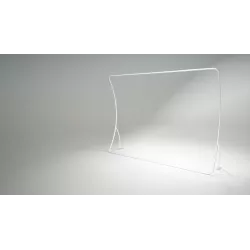
A 3 x 3 pop-up display may look sufficient on paper, but if the frame lacks rigidity or the graphic is poorly tensioned, the graphic wall quickly loses legibility after a few hours. At a trade show, the priority is not only the size: it is how well the structure holds up from the morning set-up to the end-of-day teardown.
Which pop-up display frame really holds up over a full trade show day?
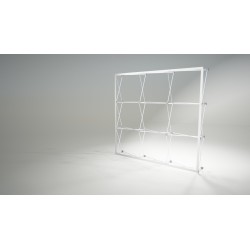
An aluminium frame remains the most sensible choice for regular use: it keeps transport weight down while ensuring good stability during assembly. This matters most if your display is set up and taken down several times a year, on different floors and in different configurations.
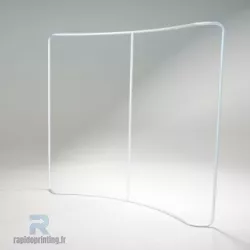
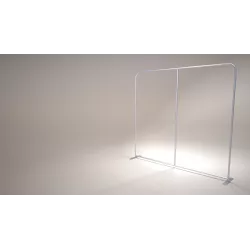
The rigidity of the frame makes all the difference on a large graphic. A frame that is too flexible creates uneven tension, hollow areas and sometimes a slight sag in the centre, a flaw that is very visible under the lighting of an exhibition hall.
Fabric or large-format print: which graphic should you choose for a pop-up display?
Between a fabric pop-up display and a graphic printed on a large-format PVC support, the rendering reacts differently to light. Tensioned textile absorbs glare better and suits trade shows, conferences and spotlit areas. The PVC support remains relevant if you are looking for a more economical option or a graphic for occasional use, but it shows creases more and reflects light more easily on pale solid areas.
The type of digital printing also matters. On textile, the key goals are good colour density and even tension. On PVC, sharpness is generally good, but the perceived quality depends heavily on the finish and on how well the surface holds once installed.
Yes, and the difference is tangible from the moment visitors enter the aisle. A compact size suits a reception area, a corner backdrop or a narrow space. As soon as you are surrounded by taller or wider neighbours, a larger pop-up display gains the advantage in front-facing visibility.
The 3 x 3 model works for small spaces or side partitions. A 5 x 3 model is a more natural fit for a mid-sized trade show, with enough distance to read the message from several metres away without the graphic looking dwarfed by its surroundings.
Straight or curved pop-up display: when should you choose one over the other?
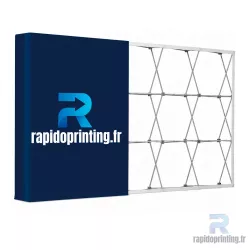
A straight pop-up display makes it easier to read a corporate graphic, a simple message or a large centred logo. It works well if you want a clean, visually stable backdrop with a well-used display surface.
The curved pop-up display creates a more enveloping presence and hides the edges slightly better depending on the viewing angle. It is a good choice for demonstration, innovation or product launch spaces, provided the artwork layout is adapted to the curvature.
Are transport and assembly really suited to regular use?
A foldable pop-up display remains a smart choice if you change venues often. The carry bag or wheeled case above all prevents knocks between two events, a point often underestimated even though repeated transport is what damages frames and graphics fastest.
The self-expanding system allows quick assembly, in most cases without heavy tools. For a field team, this time saving matters more than installation speed alone: fewer separate parts also means fewer mistakes, fewer forgotten items and less breakage on reassembly.
Which accessories are useful, and which are mainly a matter of comfort?
A counter does not play the same role as a simple visual add-on. It serves as a welcome point, a light storage area and a surface for documentation, which structures a small exhibition space better than a graphic wall alone.
Spotlights improve legibility if the hall is dark or if your display is set back from a main aisle. However, on a glossy PVC graphic they can accentuate reflections: on this point, you need to consider the support and the lighting together.
How many uses can you expect from a pop-up display?
Lifespan depends first on how often it is transported and on the quality of the finishes, not on how it looks when it arrives. A properly locked frame, stored in its case after each use and fitted with a suitable graphic, can serve at many trade shows without any noticeable loss of stability.
For repeated use, it is better to choose a model designed for reuse rather than a lightweight solution intended for a few one-off events. This is often where the real cost difference lies over time: graphic replacement, hinge wear, overall stability and the hold of the fixings.