


Rectangular Beachflag
Showing 1-2 of 2 item(s)
Rectangular beachflag: vertical visibility for outdoor use
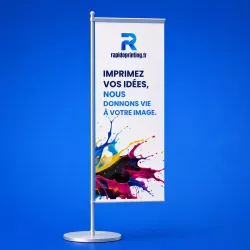
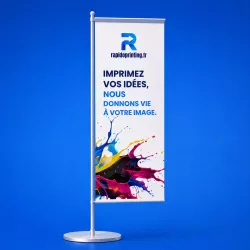
A rectangular beachflag with an 80 cm wide sail delivers visibility from a distance without taking up the floor space of a standard roll-up: the base stays light, wind resistance is easier to manage, and the structure suits outdoor use as well as certain indoor event settings. This vertical shape is the right choice whenever you need a message to be visible from about ten metres away, without encroaching on horizontal space.
Which beachflag size should you choose: S, M or L?
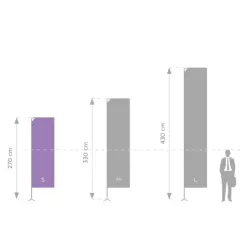
The rectangular beachflag comes in three sizes. Size S suits narrow spaces or compact indoor points of sale. Size M remains the standard for outdoor events. Size L takes over when you need to stand out at a large trade show, on a façade or in a wide walkway.
Every flag keeps the same rectangular proportions; only the overall height changes. This is not a minor detail: with an identical message, height determines how well it reads from a distance and how much presence the display has in its surroundings.
The base determines the beachflag's stability
A beachflag's stability depends on the base first, even before the graphic. A cross or U-shaped base works if it can take ballast: sand, water or an additional weight. Without this anchoring point, a well-printed display quickly becomes unstable as soon as the wind picks up.
The pole, generally made of fibreglass or aluminium, must follow the tension of the sail without creating a hard point. For prolonged outdoor use, above all check the compatibility between the flag height, the type of base and the level of wind exposure: this trio determines how well it holds up over a full day.
Single-sided or double-sided: which display should you plan for?
A rectangular beachflag can be printed single-sided or double-sided depending on the direction of foot traffic. Single-sided printing is enough if the display is mainly seen from one side. Double-sided becomes useful on a forecourt, a central aisle or a through entrance, when visitors arrive from two different directions.
The sail is generally made of polyester fabric, a material suited to outdoor use for its flexibility and matt finish. Under strong light, this choice limits glare and keeps the message legible, where a more rigid material would be less tolerant of real exposure conditions.
Finishes that prevent premature wear
Double-sided printing requires a file prepared for each side. Text orientation, bleeds and the pole pocket area must be planned for to avoid visible white gaps or a partially hidden message once the sail is mounted.
Finishes matter as much as the printing: a reinforced hem and stitched edges limit fraying after several set-ups. If you plan recurring use, trade show after trade show or campaign after campaign, these details extend the sail's lifespan.
Sail only or complete structure?
The appeal of a professional rectangular flag also lies in the option of replacing only the sail. Sizes S, M and L can be ordered separately, which lets you keep the base-and-pole structure and change only the graphic.
This option makes sense if you alternate seasonal promotions, local campaigns or corporate messages. Running costs drop significantly as long as the structure stays in good condition and only the fabric is renewed.
In which settings is the rectangular beachflag the right display?
On a beach or in an open-air area: the display works well if the base is properly weighted and the fabric is designed to withstand UV and humidity. The movement of the flag adds visibility without requiring a large footprint.
At an indoor trade show: size S or M is often enough, especially near a stand or an entrance. Set-up is quick and the display takes up less room than a rigid freestanding structure.
At an outdoor point of sale: the beachflag remains relevant for signalling an opening, a promotion or a service visible from the street. It catches the eye through its height and movement, whereas a roll-up is better suited to sheltered indoor use.
In urban or roadside settings: the flag shape creates a legible presence without blocking sightlines. It is often the right choice when you need to signal without cluttering the shopfront or the access point.
Why do agencies and organisers often choose this format?
A communications agency generally chooses the rectangular beachflag for three practical reasons: quick deployment, legibility from a distance, and easy renewal of the graphic. It is not the most rigid display, but it is one of the most flexible to use across several campaigns.
An event organiser especially values its light weight in transport and its versatility between outdoor and indoor use. For a public body, a retail network or a venue receiving the public, the appeal lies rather in being able to keep the structure and adapt the message through the seasons.
What lead time should you allow for printing a rectangular beachflag?
An average lead time of 10 working days between file approval and dispatch is a realistic benchmark for a printed beachflag. This may vary depending on the size, double-sided printing and the level of finishing required.
If you are working to a fixed event date, the point to watch is not only production: it is file approval. Checking the graphic orientation, the stitching area and the fit to the size beforehand avoids delays caused by last-minute corrections.