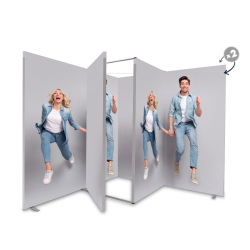
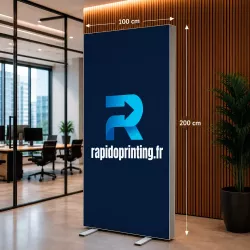
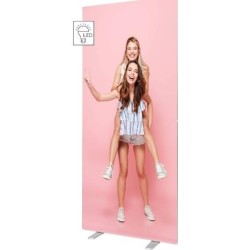
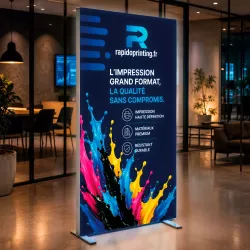
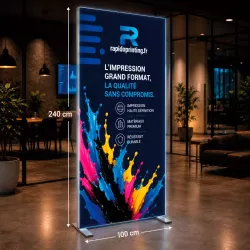
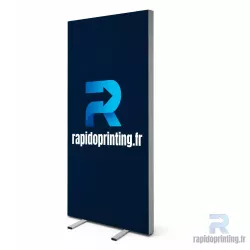
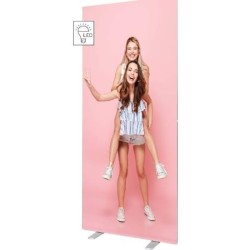
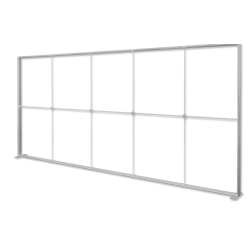
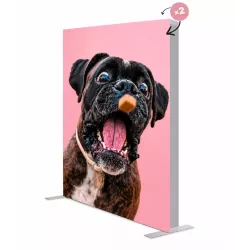
A divider and a light box do not meet the same need: isolating a meeting area, channelling visitor flow across 100 m² or making a message legible under trade show lighting. The first rule is simple: a divider structures the space, a light box makes the visual readable, even in a busy environment.
Stand divider or LED light box: which need are you meeting?
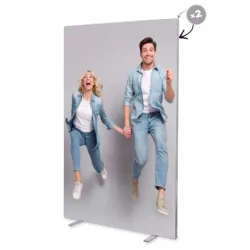
The stand divider is the right choice when you need to create zones without making the build-up heavier. At a trade show, it visually separates a demonstration area, a light storage space or a meeting zone.
The stability of the base and the actual width of the module matter more than the visual. A divider that is too narrow segments the space poorly, and a base that is too light moves as visitors pass by again and again.
Tensioned fabric or large-format banner: which material for the divider?
A tensioned fabric gives a matt, glare-free surface under spotlights or hall lighting. A large-format printed banner withstands frequent handling and repeated set-ups better, with a more rigid finish but one that is often more sensitive to reflections.
Height is used to isolate, width to draw a clear walkway. To separate two discussion areas, we recommend a height that blocks the line of sight at head height. To organise circulation, several coordinated modules work better than a single oversized panel that is hard to position.
When are LED light boxes the right choice on a stand?
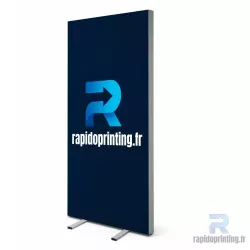
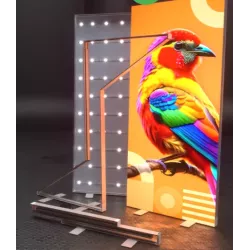
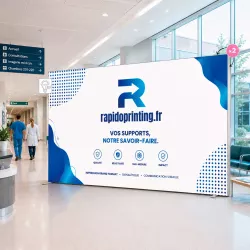
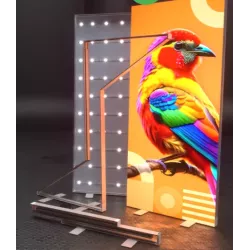
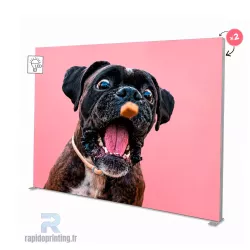
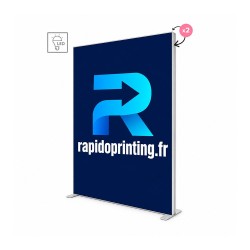
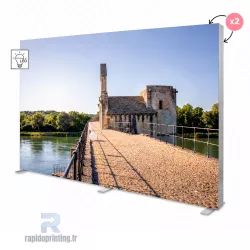
Light boxes become the right choice when your message must stay visible in a competitive environment. On an exhibition stand surrounded by signs, Kakemonos and mixed lighting, LED backlighting offers more stable readability than a non-illuminated display.
This is one of the main advantages of light boxes: they are there to attract attention rather than to separate. They are not a partitioning tool in the strict sense, but a visual focal point.
Single-sided or double-sided: where should you place your LED light box?
A single-sided light box is used against a wall or at the back of a stand. The double-sided version suits an aisle or the centre of a space, when the visual must be seen from both directions of traffic. This choice determines the layout, the weight of the unit and access to the power supply.
Aluminium frame: what matters on an LED light box that is set up often
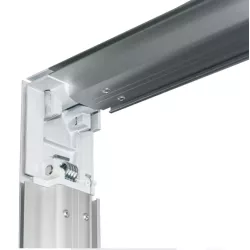
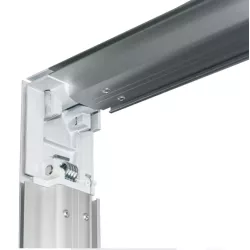
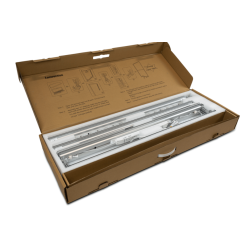
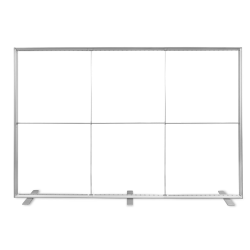
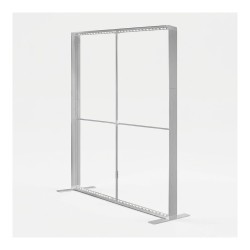
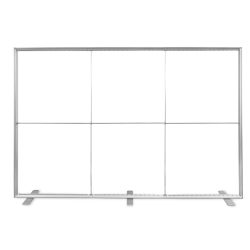
The aluminium frame remains the standard for this type of display: it combines rigidity, a suitable weight and ease of transport. An anodised finish withstands repeated handling better than a structure prone to scratches. If the light box is set up often, the quality of the joints and of the assembly system matters more than how the frame looks in a photo.
Wall-mounted or freestanding light box: which LED light boxes for which venue?
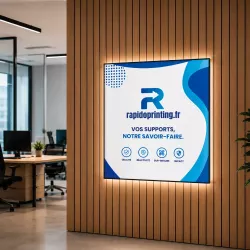
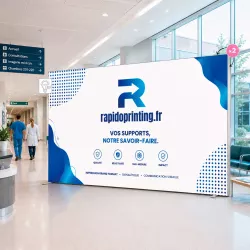
Light boxes are not all ordered for the same use. A wall-mounted light box, with a fixing designed to stay in place, suits a fixed point of sale or the signage of a permanent reception area. Freestanding models make more sense on an event stand, provided you plan for floor space, power supply and cable routing.
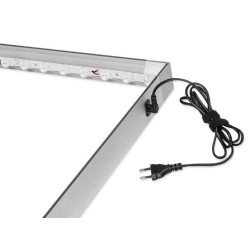
Some models include discreet storage for cables or small accessories. This detail matters when the display is seen up close, in a reception area or a retail corner. At a trade show, a poorly cabled light box is quickly noticed, even with a good visual.
- For a mobile stand: Foldable Lightbox LED 85x200, LED BOX FOLD 100x200 single-sided, Backlit LED Light Tower 85x200cm double-sided.
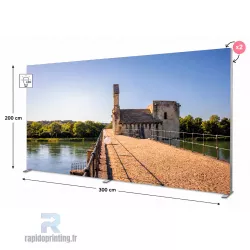
- For an aisle or an island: LED BOX light panel 100×200 double-sided, LED BOX 100x230, 100x240 and 100x250 double-sided, LED BOX + 200x200, 200x240, 300x200 and 300x240 double-sided, LED BOX PRO 200x250.
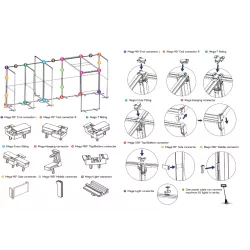
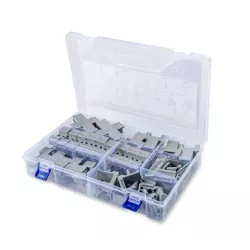
- For an advertising wall: modular WALL BOX SYSTEM, with cabin, connectors and dedicated lamp, and the LED backlit wall panel.
- For a custom frame: CUSTOM TENSIONED FABRIC LED ALU FRAME and replacement backlit tensioned fabric.
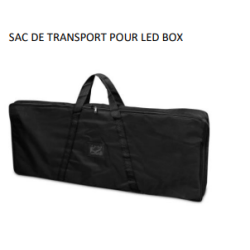
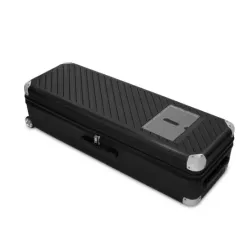
- For transport: carry bag for double-sided LED BOX.
Light boxes customised in format and finish are only justified when there is a genuine layout constraint. A standard format often speeds up production and makes replacing the fabric simpler. Specific dimensions are useful to match a layout grid, a clearance height under a structure or a wall that is already equipped.
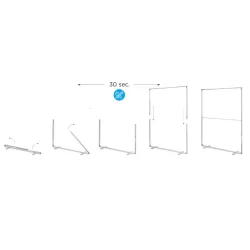
For event use, set-up time and the repetition of handling should weigh as much as aesthetics. A modular divider is worthwhile if the configuration changes from one show to the next. LED light boxes are recommended when your main message must stay visible from several metres away, in a visually crowded environment.